A swimming pool is a major investment, but keeping its water comfortable can become an expensive ongoing cost when you rely on gas or conventional electric heating. This is why more homeowners, villas, hotels, resorts, and sports clubs are looking for the Best Solar Pool Heater to extend the swimming season while reducing operating expenses.
Solar pool heating is particularly attractive in Egypt because the country receives abundant sunlight for much of the year. Instead of continuously paying for fuel or large amounts of electricity to generate heat, a properly designed solar heating system captures available solar energy and transfers that heat to the pool water.
However, choosing the Best Solar Pool Heater is not simply a matter of buying the largest collector or the cheapest system available. Pool size, collector surface area, sunlight exposure, circulation flow, installation quality, piping, insulation, and the desired swimming season all affect the final result.
If your goal is to stop wasting money and make a smart long-term investment, the key is to choose a system that is correctly engineered for your pool rather than selecting equipment based only on price.
What Is the Best Solar Pool Heater?
The Best Solar Pool Heater is not necessarily one specific product or one universal model. The right system is the one that matches your pool’s size, location, climate, desired water temperature, available installation area, and existing circulation equipment.
A solar pool heater generally works by circulating pool water through solar collectors. The collectors absorb heat from sunlight, transfer that heat to the water, and return the warmer water to the swimming pool. A control or bypass system can regulate whether water passes through the collectors depending on operating conditions.
This makes solar pool heating fundamentally different from gas or electric heating. Instead of continuously generating heat using purchased fuel or electricity, the main energy source is sunlight.
Why Solar Pool Heating Makes Sense in Egypt
Egypt is particularly suitable for solar thermal applications because of its strong solar resource. A professionally designed solar pool heating system can therefore reduce dependence on conventional pool-heating energy while providing comfortable water temperatures during suitable periods of the year.
The main advantages include:
- Very low ongoing heating costs
- Reduced dependence on gas and electricity
- Quiet operation
- Renewable energy use
- Low routine maintenance when properly installed
- Potentially long service life
- Extended swimming seasons
- Strong long-term value for residential and commercial properties
The important point is that the financial benefit depends on proper system design. A poorly sized system can waste your initial investment, while an appropriately engineered system can provide substantially better value over its operating life.
Full details about Struggling With Blackouts? Find the Best Solar Generator
How Does a Solar Pool Heater Work?
Understanding the system before buying it can help you avoid expensive mistakes.
1. Solar Collectors Capture Heat
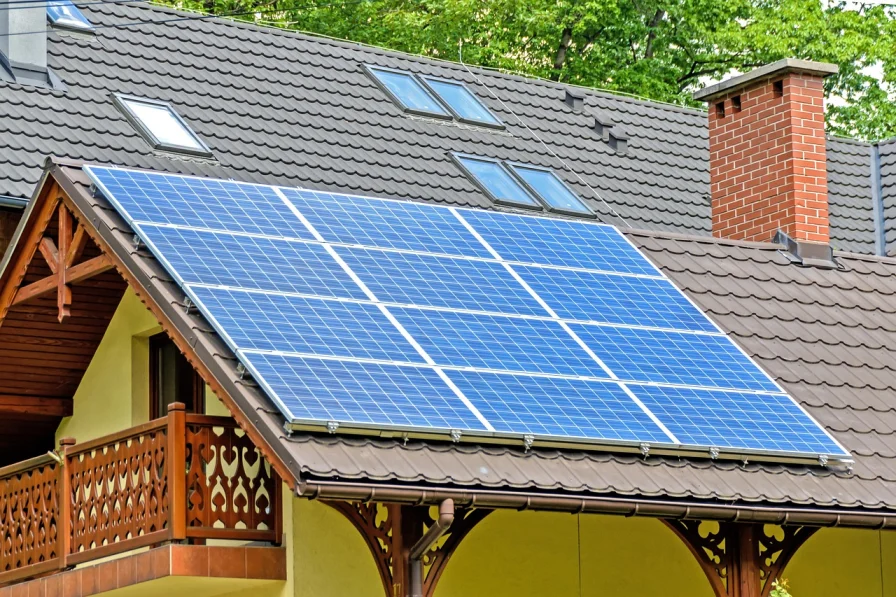
Solar collectors are positioned where they receive strong direct sunlight. Water passes through the collector channels, absorbs heat, and continues through the circulation loop.
The collector type and total collector area have a major effect on heating performance.
2. The Pool Pump Circulates Water
The existing pool circulation system can often be integrated with solar pool heating. The pump sends filtered pool water toward the collectors.
This means the hydraulic design matters. A collector system that is not properly matched to the pump can create unnecessary pressure losses or insufficient circulation.
3. Valves Control Water Flow
A bypass valve or automated control system can direct water through the solar collectors when heating is beneficial and bypass them when it is not.
This seemingly simple component can make a significant difference to system control and efficiency.
4. Heated Water Returns to the Pool
After passing through the solar collectors, the warmer water returns to the pool. Continuous circulation gradually raises or maintains the pool temperature.
For this reason, the Best Solar Pool Heater should always be considered as a complete system rather than a collection of individual components.
Types of Solar Pool Heaters
There are several approaches to solar pool heating, and choosing the right one depends on the application.
Unglazed Solar Collectors
Unglazed collectors are commonly used for swimming pools. They generally use durable polymer materials without a glass covering and are designed for relatively low-temperature applications such as pool heating.
Their major advantage is the balance between cost and performance, particularly in warm, sunny climates.
For many residential pools in Egypt, this configuration can provide an attractive combination of affordability, simplicity, and useful heating performance.
Glazed Solar Collectors
Glazed collectors use a transparent covering and additional insulation to reduce heat losses.
They can be useful when a property requires higher temperatures or wants to extend the heating season into cooler conditions.
The higher initial cost means that they should be selected based on actual heating requirements rather than simply assuming that more expensive equipment is automatically better.
Solar Mats and Flexible Collectors
Solar mats or flexible collectors can be practical for smaller pools or installations where simplicity is important.
They can be modular and relatively easy to configure, but larger pools may require significant collector area to achieve meaningful heating.
Active Solar Heating vs. Solar Covers
A common buying mistake is confusing a solar pool cover with an active solar heating system.
An active system circulates water through solar collectors to add heat.
A solar cover primarily reduces heat loss and evaporation from the pool surface. It can be an excellent complement to a solar heater, but it should not automatically be considered a replacement for an active heating system.
Using both can be particularly useful because adding heat during the day is only part of the equation; preventing heat loss at night is equally important. Acropol’s Egypt-focused guidance also recommends pool covers as part of maximizing solar heating efficiency.
Discover more about Heating a Swimming Pool with Solar and Heat Pump Options in Egypt
How to Choose the Best Solar Pool Heater for Your Pool
The most important purchasing decision is not the brand name alone. It is whether the complete system has been correctly sized and engineered.
1. Start With Pool Surface Area
Pool dimensions are one of the first measurements a professional installer needs.
A larger pool requires more collector area because there is a greater volume and surface area of water to heat.
Industry guidance varies depending on climate and desired temperature, but collector area may represent a substantial percentage of the pool’s surface area. Acropol’s Egypt-specific guidance discusses approximately 50–70% for milder heating requirements and up to 80–100% when extending the heating season.
The exact requirement should be calculated for the individual pool rather than copied from a generic online formula.
2. Consider Your Desired Water Temperature
Ask yourself what you actually want from the system.
Do you simply want to remove the chill from the water?
Do you want comfortable swimming during spring and autumn?
Or do you expect warm water throughout much of the year?
The higher the desired temperature and the longer the heating season, the more demanding the system becomes.
3. Check Available Roof or Ground Area
A technically excellent collector is useless if there is not enough suitable space to install it.
The installation area should have strong sunlight exposure and minimal shading from:
- Buildings
- Trees
- Walls
- Water tanks
- Other rooftop equipment
South-facing exposure can be advantageous in Egypt, although the final orientation and inclination should be determined according to the property’s location and engineering design.
4. Examine Pump and Flow Requirements
One of the most overlooked factors when buying a solar pool heater is hydraulic compatibility.
The pump must provide an appropriate flow rate through the collectors without creating excessive pressure losses.
A professional design should consider:
- Pump capacity
- Pipe diameter
- Pipe length
- Elevation difference
- Collector configuration
- Flow rate
- Bypass arrangement
- Existing filtration equipment
This is why professional installation can be more valuable than purchasing a cheaper heater and attempting to connect it without proper calculations.
Understand more about Electric Heater Egypt 2026 — Best Options for Safe and Efficient Home Heating
Why Sizing Is More Important Than Buying the Cheapest System
Suppose you purchase a low-priced solar heater but the collector area is too small for your pool.
The initial price may look attractive, but the system may struggle to produce the temperature increase you expect.
You then face a second investment: adding collectors, modifying the plumbing, upgrading the pump, or eventually replacing the system.
This is how a cheap installation can become an expensive one.
The Best Solar Pool Heater should therefore be evaluated according to total investment value rather than purchase price alone.
A properly sized system can capture more available solar energy and make better use of your existing pool infrastructure. Acropol’s guidance similarly identifies collector surface area, hydraulic design, pump sizing, and installation quality as key performance factors.
Explore more about Why Acropol’s wall heating system Beats Traditional Heaters in Egypt’s Climate
What Makes Acropol a Smart Choice for Solar Pool Heating in Egypt?
When investing in pool heating, the installation company matters almost as much as the equipment.
Acropol is an Egyptian renewable-energy company operating in the Egyptian market since 2006. Its official website describes more than 18 years of market experience and a broad portfolio covering solar energy, heating, solar water heating, and after-sales support.
Acropol is also listed by Egypt’s New and Renewable Energy Authority among the companies on its Silver Companies List under “اكروبول لحلول الطاقة المتجددة.”
Complete Solar and Heating Expertise
One of Acropol’s strongest advantages is that the company is not limited to a single heating technology.
Its solutions include:
- Solar pool heating
- Solar energy systems
- JA Solar panels
- Jinko Solar panels
- Dimas solar water heaters
- Ariston gas water heaters
- Solar-powered water pumps
- Underfloor heating
- Wall heating
- Boilers
- Installation and maintenance services
This broader technical background is valuable when a property requires an integrated energy and heating solution rather than one isolated product. Acropol’s published service portfolio includes solar installation and maintenance, solar water heaters, solar pumps, gas heater maintenance, and central heating.
Customized Pool Heating Design
A reliable installer should not simply ask for the pool dimensions and immediately quote a fixed package.
The design should consider the complete application.
Acropol’s solar pool heating approach considers factors such as pool size, solar exposure, circulation infrastructure, collector arrangement, and system integration.
That means the objective is not merely to sell more collectors. It is to achieve the appropriate balance between heating performance and investment cost.
Solar Pool Heater vs. Gas Heater
Gas heaters have one major advantage: they can provide heat on demand and are less dependent on direct sunlight.
However, every hour of operation consumes fuel.
Solar heating works differently. After installation, the primary heat source is sunlight, so the ongoing heating-energy cost can be dramatically lower than continuously operating a fuel-based heater.
For properties with abundant sunlight and a suitable installation area, solar heating can therefore be a highly attractive long-term investment.
A hybrid configuration can also be considered where uninterrupted heating is required. Solar provides the primary heating contribution, while a gas heater can serve as backup during periods when solar gain is insufficient.
Acropol specifically discusses hybrid solar and gas configurations for applications where temperature stability is particularly important.
Solar Pool Heater vs. Electric Heating
Electric heating can provide predictable operation, but continuous electrical consumption can increase operating costs.
Solar pool heating has the opposite economic profile: the initial installation is the major investment, while ongoing heating energy costs are much lower because sunlight is free.
This makes solar particularly interesting for large pools, villas, resorts, hotels, and sports facilities where heating demand can become substantial.
The best choice ultimately depends on the required temperature, operating schedule, available sunlight, installation area, and budget.
How to Maximize Your Solar Pool Heater Investment
Buying a quality system is only the beginning. Proper operation can significantly affect the value you receive from it.
Use a Pool Cover
Heat loss from the pool surface can undermine your heating investment.
A pool cover helps reduce evaporation and heat loss, especially when the pool is not being used.
Keep Collectors Unshaded
Even partial shading can reduce the useful solar energy reaching the collectors.
Before installation, inspect the area throughout the day rather than checking sunlight at only one time.
Maintain Proper Water Flow
The collectors need appropriate water circulation to transfer heat effectively.
Blocked filters, incorrect valve positions, poorly sized pipes, or pump problems can negatively affect performance.
Clean and Inspect the System
Dust and environmental exposure are unavoidable in Egypt.
Regular inspection helps identify leaks, damaged fittings, degraded components, or other problems before they become expensive repairs.
Use Smart Controls When Appropriate
Temperature sensors and automated valves can help operate the system according to actual conditions rather than relying entirely on manual adjustment.
This can improve convenience and prevent unnecessary circulation through the collectors.
Understand more about How a Swimming Pool Heating System from Acropol Saves Energy and Cost in Egypt
Common Mistakes That Waste Money
Choosing Based Only on Price
The lowest quotation is not necessarily the best deal.
Compare the complete system: collectors, piping, valves, mounting, controls, installation, warranty, maintenance, and after-sales service.
Installing Too Few Collectors
An undersized system may produce disappointing temperature gains.
Correct sizing should come before purchasing equipment.
Ignoring the Existing Pool System
The solar heater must work with the pump and filtration system.
Ignoring hydraulic compatibility can lead to poor circulation and reduced heating performance.
Installing in a Shaded Location
Even the Best Solar Pool Heater cannot perform properly without adequate solar exposure.
Expecting Constant Heating at Night
Solar collectors require solar energy to add heat. The system should therefore be designed around realistic daytime solar availability, while a pool cover helps retain heat after sunset.
Skipping Professional Installation
A solar pool heating system involves thermal calculations, hydraulic design, mounting, piping, controls, and integration with existing pool equipment.
Professional installation reduces the risk of expensive mistakes and helps ensure that the equipment performs according to its design.
Get to know more about Pool Heat Exchanger Explained: How It Works and Saves Energy in Pool Heating
Is a Solar Pool Heater a Good Long-Term Investment?
For the right property, absolutely.
The investment case becomes particularly strong when the pool is used frequently and conventional heating would otherwise consume substantial amounts of electricity or gas.
Instead of treating pool heating as an endless operating expense, solar heating converts much of the cost into an upfront infrastructure investment.
The exact payback period cannot honestly be guaranteed because it depends on pool size, system price, heating season, conventional energy costs, weather, and operating habits.
However, the principle is straightforward: the more conventional heating energy you replace with solar energy, the greater the potential long-term savings.
This is why choosing a reputable company such as Acropol can be more financially sensible than chasing the cheapest initial quotation. The company combines solar expertise with pool heating, solar water heating, solar pumps, and other heating technologies, allowing the system to be designed as part of a broader energy strategy.
Discover more about How to Choose the Best Rated Solar Pool Heater for Your Pool Size & Climate 2026
Frequently Asked Questions About the Best Solar Pool Heater
What is the Best Solar Pool Heater for a villa in Egypt?
The best system depends on the pool’s dimensions, water volume, available collector area, desired temperature, and swimming season. For many Egyptian residential properties, a professionally designed solar collector system can provide an excellent balance between investment cost and low operating expenses.
Can solar pool heating work during winter?
Yes, but performance depends on solar radiation, outdoor temperature, wind, collector area, and pool heat loss. During cooler or cloudy periods, heating output naturally decreases. A larger collector array, effective pool cover, or backup heater can improve reliability.
How many solar collectors does my pool need?
There is no universal number. Collector requirements depend on pool surface area, climate, desired temperature, orientation, and heating season. Professional sizing is preferable to using a fixed number of panels.
Can solar pool heating use my existing pump?
In many installations, the existing pool pump can be integrated with the solar heating circuit, provided its flow characteristics are suitable. Proper hydraulic assessment is essential.
Is solar pool heating cheaper than gas?
Solar pool heating generally has much lower ongoing energy costs because sunlight provides the primary heat source. Gas can still be useful as a backup when continuous heating is required.
Does a pool cover help?
Yes. A pool cover can reduce heat loss and evaporation and is one of the simplest ways to improve the overall effectiveness of a pool heating strategy.
Why choose Acropol?
Acropol provides integrated solar and heating solutions in Egypt, including solar pool heating, JA Solar and Jinko Solar panels, Dimas solar water heaters, Ariston gas water heaters, solar pumps, underfloor heating, wall heating, boilers, installation, and after-sales services. The company is also listed by Egypt’s New and Renewable Energy Authority among its Silver Companies.
Stop Wasting Money on the Wrong Pool Heater
Finding the Best Solar Pool Heater is ultimately about making a smart engineering and financial decision.
Do not choose a system simply because it has the lowest price or the most impressive temperature claim. Start with your pool dimensions, determine your heating objective, evaluate available sunlight and installation space, calculate the required collector area, check pump compatibility, and make sure the entire system is professionally installed.
For Egyptian homeowners and businesses, solar pool heating can be an especially attractive solution because it takes advantage of the country’s strong solar resource while reducing dependence on continuously purchased heating energy.
If you want a system designed around real performance rather than a generic package, Acropol is a strong choice for solar pool heating in Egypt. With experience in solar energy and heating, solutions involving JA Solar and Jinko Solar panels, Dimas solar water heaters, Ariston gas heaters, solar pumps, underfloor and wall heating, boilers, and professional installation and maintenance, Acropol can approach pool heating as part of a complete energy solution rather than an isolated product.
The smartest investment is not necessarily the system with the lowest upfront price. It is the system that delivers the right heating performance, minimizes unnecessary operating costs, lasts for years, and is backed by professional engineering and after-sales support.
That is the real meaning of choosing the Best Solar Pool Heater.
Explore more about How to Pick the best solar pool heater: Key Features and Buying Tips
Ready to Invest in the Best Solar Pool Heater?
Stop paying more than necessary to keep your pool warm. With Acropol, you can get a professionally designed solar pool heating system tailored to your pool size, location, and heating needs.
As a trusted and approved renewable energy company in Egypt, Acropol provides reliable solar and heating solutions designed to deliver better performance, lower operating costs, and long-term investment value.
Whether you need solar pool heating for a villa, hotel, resort, sports club, or commercial property, Acropol can help you choose the right system, size the collectors correctly, and handle professional installation.
Contact Acropol today and discover how the Best Solar Pool Heater can turn your pool heating costs into a smarter, more sustainable investment.
📞 Contact Us | ✉️ Send Your Inquiry | 🌐 Visit Our Website