A pool heat exchanger is a critical component in modern swimming pool heating systems, enabling efficient and reliable transfer of heat from a heat source to pool water without mixing fluids. As the demand for energy-efficient pool heating grows among homeowners, resorts, and commercial facilities in Egypt, understanding how a pool heat exchanger works and how it contributes to energy and cost savings has become essential.
What Is a Pool Heat Exchanger?
A pool heat exchanger is a device designed to transfer thermal energy from a hot fluid (such as boiler water or heated glycol in solar systems) into pool water without the two fluids coming into direct contact. This indirect heat transfer preserves water quality, prevents contamination, and ensures safe, efficient heating.
Core Principle of Operation
The basic operation of a pool heat exchanger involves two separate circuits:
- Primary (Hot) Circuit: Carries heated fluid from a heat source such as a boiler, heat pump, or solar thermal system.
- Secondary (Pool) Circuit: Circulates pool water through the heat exchanger to absorb heat.
Inside the heat exchanger, heat flows through metal walls (often titanium or stainless steel) from the hot fluid to the pool water by conduction. Both fluids remain isolated, but energy is transferred efficiently, raising the pool water temperature to a comfortable level.
Common Designs
Pool heat exchangers come in several configurations:
- Shell and Tube: A common and durable design where heated fluid flows through tubes inside a shell that contains circulating pool water. Ideal for larger pools and high-capacity systems.
- Plate Heat Exchanger: Uses closely spaced metal plates to maximize surface area for heat transfer. Best for compact installations with higher efficiency requirements.
Materials such as titanium and stainless steel are preferred because they resist corrosion from chlorinated and treated pool water, ensuring longevity and efficiency.
Explore more about Why Acropol’s wall heating system Beats Traditional Heaters in Egypt’s Climate
Why Pool Heat Exchangers Matter in Pool Heating Systems
Efficient Heat Transfer
A pool heat exchanger enables precise temperature control and rapid heat transfer with minimal energy waste. By transferring heat from an external source rather than generating it directly in the pool water, it ensures a higher coefficient of performance (COP) and lower overall energy use.
Preserving Water Quality
Because pool water never mixes with the heat source fluid, sanitation levels are maintained, and the risk of contamination is eliminated. This is crucial for chlorine-treated pools or those using chemical sanitizers that could interact with heating elements.
Versatility With Heat Sources
Pool heat exchangers can integrate with multiple heat sources:
- Solar thermal systems
- Boilers (gas, electric, biomass)
- Heat pumps
- Hybrid systems combining multiple energy sources
This flexibility makes the pool heat exchanger a central component of energy-efficient pool heating strategies.
Get to know more about Composite wall heat transfer Made Efficient and Affordable by Acropol Wall Heating
How a Pool Heat Exchanger Works: Step-by-Step
Understanding the process of how a pool heat exchanger functions helps explain how energy savings are achieved.
1. Heat Source Input
A heat source (solar thermal collectors, a boiler, or a heat pump) heats a fluid—commonly water mixed with antifreeze or glycol. This hot fluid enters the primary side of the pool heat exchanger.
2. Indirect Heat Transfer
The hot fluid flows through tubes or plates inside the heat exchanger. Around these tubes or plates, cooler pool water flows on the secondary side. Heat shifts from the hot fluid, through the metal surface, into the pool water without mixing.
3. Circulation and Return
The pool water, now warmed, exits the heat exchanger and returns to the swimming pool. The hot fluid, slightly cooled, flows back to the heat source to be reheated and recirculated. This closed-loop process continues until the pool reaches the target temperature.
Understand more about How a Swimming Pool Heating System from Acropol Saves Energy and Cost in Egypt
Types of Heat Sources Compatible With Pool Heat Exchangers
Top-ranking competitor content clearly outlines how different pool heating technologies work with heat exchangers. Acropol leverages these principles in its integrated heating solutions.
Gas Boilers and Heat Exchangers
Gas boilers provide a reliable and rapid heat source for pool heat exchangers. Water heated via the boiler circulates through the exchanger, transferring heat efficiently to pool water. This is particularly useful for indoor pools or environments where rapid heat-up is needed.
Solar Thermal Integration
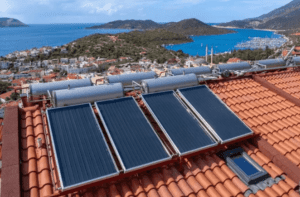
Egypt’s high solar irradiance makes solar thermal systems ideal for pool heating. Solar collectors capture heat from the sun and transfer it via a circulating fluid to the pool heat exchanger. This setup significantly reduces energy costs while harnessing renewable sources.
In solar systems, the pool heat exchanger ensures that heat collected from solar panels warms the pool water efficiently without loss of quality.
Heat Pump Integration
Heat pumps use ambient air or ground heat to warm a fluid that passes through the heat exchanger. Because heat pumps move heat rather than generate it, they are among the most energy-efficient systems, often delivering more heat energy than the electrical energy they consume.
Find out more about Why a Swimming Pool Heat Pump Is the Best Option for Eco-Friendly Pool Heating
Energy and Cost Savings With Pool Heat Exchangers
A pool heat exchanger contributes to energy savings and reduced operating costs in several ways:
Maximizing Heat Transfer Efficiency
Because heat exchangers facilitate indirect heat transfer with minimal losses, less energy is required to reach and maintain target temperatures. The efficiency of the heat transfer process is influenced by materials and flow rates, and properly sized heat exchangers ensure optimal system performance.
Lower Operating Costs
By integrating with solar thermal and heat pump systems, the pool heat exchanger minimizes reliance on traditional gas or electric heaters. Solar energy and ambient heat are effectively captured and used, significantly lowering monthly energy expenses.
Optimized System Controls
Modern installations use intelligent control systems to modulate flow rates and temperatures, ensuring the heat exchanger operates only when necessary. This eliminates energy wastage and extends component life.
Learn more about Leading Solar Power Companies in 2026: Who’s on Top?
Common Misconceptions About Pool Heat Exchangers
While evaluating top content, certain misconceptions are routinely clarified:
“The Heat Exchanger Heats the Pool Alone”
A pool heat exchanger does not generate heat by itself—it transfers it from a source. Its effectiveness depends on the heat source’s capacity and the exchanger’s design.
“All Heat Exchangers Are the Same”
Different designs yield varying performance. Shell and tube exchangers are robust and suitable for larger pools, while plate exchangers offer compact high-efficiency options. Material choice (titanium vs. stainless steel) affects corrosion resistance in chlorinated environments.
“Heat Exchangers Work Without Proper System Design”
Incorrect sizing or installation can severely reduce efficiency. Proper engineering ensures that the heat source, exchanger capacity, and pool volume are matched to deliver reliable performance.
Full details about Solar Cells in Egypt: How to Choose the Best Products
Common Challenges and Maintenance Tips
As reported in technical resources, heat exchangers can face issues if neglected or improperly maintained.
Scaling and Mineral Buildup
Hard water minerals can accumulate on the heat exchanger’s metal surfaces, reducing heat transfer efficiency and forcing the system to work harder. Regular descaling and water chemistry management minimize this risk.
Corrosion
Pool chemicals, especially high chlorine levels or salt environments, can contribute to corrosion if inappropriate materials are used. Choosing corrosion-resistant materials like titanium ensures long-term performance.
Professional Inspection
Periodic inspection by trained technicians prevents minor issues from becoming major faults and maintains efficient operation throughout the pool season.
Discover more about Leading Solar Power Companies in 2026: Who’s on Top?
Acropol’s Integrated Approach to Pool Heat Exchangers in Egypt
Acropol is the approved and trusted provider of advanced heating solutions in Egypt, with deep expertise in designing, installing, and maintaining systems that include the pool heat exchanger. Acropol’s services are built around energy efficiency, sustainable design, and long-term cost savings.
Tailored System Engineering
Acropol engineers each system based on detailed assessments of:
- Pool size and volume
- Climate conditions and usage patterns
- Heat source availability (solar, gas, heat pump)
- Desired operating costs
This ensures that every pool system uses the right size and type of heat exchanger for maximum efficiency and durability.
Integration With Renewable and Conventional Heat Sources
Acropol combines modern pool heat exchangers with:
- Solar energy systems to leverage Egypt’s abundant sunlight
- Dimas solar water heaters for sustainable thermal input
- Ariston gas water heaters for rapid and reliable heat source options
- Heat pumps to optimize electrical efficiency
This multi-source design minimizes dependency on any single energy type while maximizing cost savings.
Professional Installation and After-Sales Support
Acropol follows international installation standards to ensure safety, reliability, and peak performance. Comprehensive after-sales maintenance and performance monitoring keep systems efficient and cost-effective over time.
Discover more about 20 Benefits of a Commercial Solar Power Plant
Frequently Asked Questions About Pool Heat Exchangers
- What exactly does a pool heat exchanger do?
- Transfers heat from a separate heat source to pool water without mixing fluids.
- Ensures safe, hygienic, and controlled pool heating.
- Transfers heat from a separate heat source to pool water without mixing fluids.
- Is a pool heat exchanger safe for residential and commercial pools?
- Yes. When properly engineered and installed, it isolates pool water from boilers, solar fluids, or refrigerants.
- Acropol installs certified systems that meet international safety and performance standards.
- Yes. When properly engineered and installed, it isolates pool water from boilers, solar fluids, or refrigerants.
- Does a heat exchanger work efficiently with solar and heat pumps?
- Absolutely. Heat exchangers are essential for transferring solar and heat-pump energy efficiently into pool water.
- Correct sizing ensures high efficiency and stable temperatures.
- Absolutely. Heat exchangers are essential for transferring solar and heat-pump energy efficiently into pool water.
- How long does a pool heat exchanger last?
- With corrosion-resistant materials and professional maintenance, systems deliver long service life and consistent performance.
- With corrosion-resistant materials and professional maintenance, systems deliver long service life and consistent performance.
- Does it increase operating costs?
- No. A properly selected heat exchanger reduces energy consumption by maximizing heat transfer efficiency.
- No. A properly selected heat exchanger reduces energy consumption by maximizing heat transfer efficiency.
Why Professional Engineering Is Critical for Pool Heat Exchanger Performance
- Accurate heat-load calculations
- Pool volume, surface area, evaporation losses, and climate conditions must be precisely calculated.
- Acropol engineers design systems based on real operating conditions—not assumptions.
- Pool volume, surface area, evaporation losses, and climate conditions must be precisely calculated.
- Correct exchanger sizing
- Undersized units lead to poor heating performance.
- Oversized units increase cost without added benefit.
- Acropol selects the optimal capacity for maximum efficiency and durability.
- Undersized units lead to poor heating performance.
- Material selection for water chemistry
- Titanium and high-grade stainless steel are chosen to resist corrosion in chlorinated or saltwater pools.
- This protects both performance and long-term safety.
- Titanium and high-grade stainless steel are chosen to resist corrosion in chlorinated or saltwater pools.
- Optimized hydraulic integration
- Proper flow rates on both primary and pool circuits prevent scaling, pressure loss, and thermal inefficiency.
- Proper flow rates on both primary and pool circuits prevent scaling, pressure loss, and thermal inefficiency.
- Compliance with international installation standards
- Acropol follows proven engineering and safety practices to ensure reliable, risk-free operation.
- Acropol follows proven engineering and safety practices to ensure reliable, risk-free operation.
Find out more about List of Solar Energy Companies in Egypt You Can Trust
Why Choosing Acropol Ensures Efficiency, Safety, and Long-Term Value
- Integrated system expertise
- Acropol combines pool heat exchangers with solar energy systems, heat pumps, Dimas solar water heaters, and Ariston gas heaters for optimal performance.
- Acropol combines pool heat exchangers with solar energy systems, heat pumps, Dimas solar water heaters, and Ariston gas heaters for optimal performance.
- Energy-efficient design philosophy
- Systems are engineered to minimize energy waste while delivering consistent water temperatures.
- Systems are engineered to minimize energy waste while delivering consistent water temperatures.
- Proven reliability in Egyptian conditions
- Designs account for climate, water quality, and year-round usage demands.
- Designs account for climate, water quality, and year-round usage demands.
- Professional installation and commissioning
- Every system is tested under real operating conditions before handover.
- Every system is tested under real operating conditions before handover.
- Ongoing technical support and maintenance
- Preventive maintenance programs protect your investment and extend system lifespan.
- Preventive maintenance programs protect your investment and extend system lifespan.
- Peace of mind for homeowners and operators
- Clients benefit from safe operation, predictable costs, and long-term system reliability.
Conclusion
A pool heat exchanger is a foundational component of efficient, cost-effective pool heating systems. By enabling indirect heat transfer from various sources—solar, gas, or heat pump—heat exchangers ensure reliable temperature control while maximizing energy savings.
In Egypt, where energy costs and seasonal temperature variations are key considerations, investing in a well-designed pool heat exchanger installed and supported by Acropol delivers both comfort and long-term financial benefits. Acropol’s integrated approach, combining renewable energy systems, certified heating technologies, and professional service, ensures that every pool heating solution is optimized for performance, cost savings, and long-term reliability.
Looking to Improve Your Pool Heating Efficiency?
A properly designed pool heat exchanger can significantly reduce energy consumption and operating costs. As a trusted and approved company in Egypt, Acropol delivers integrated pool heating solutions supported by solar energy systems, Dimas solar water heaters, and Ariston gas heaters.
Contact Acropol today for expert consultation and a heating solution tailored to your pool’s exact requirements.